
The Dirt
Elephant Mountain sits above the reach of the Missoula floods, at about 1,500 feet in the Rattlesnake Hills.
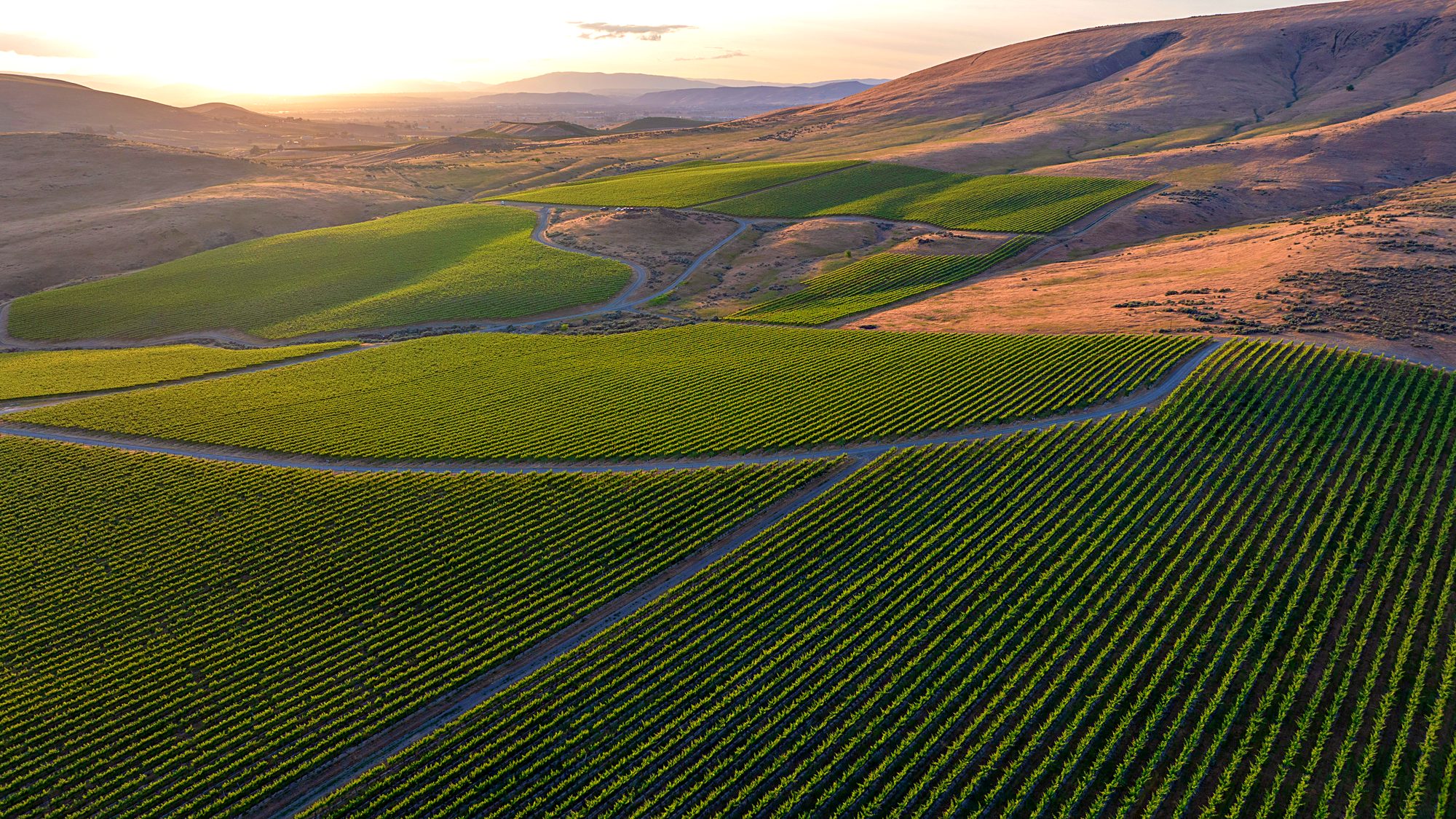
Elephant Mountain Vineyard, looking northeast · June 2025 · Photo: Digital Vendetta
Above the floods
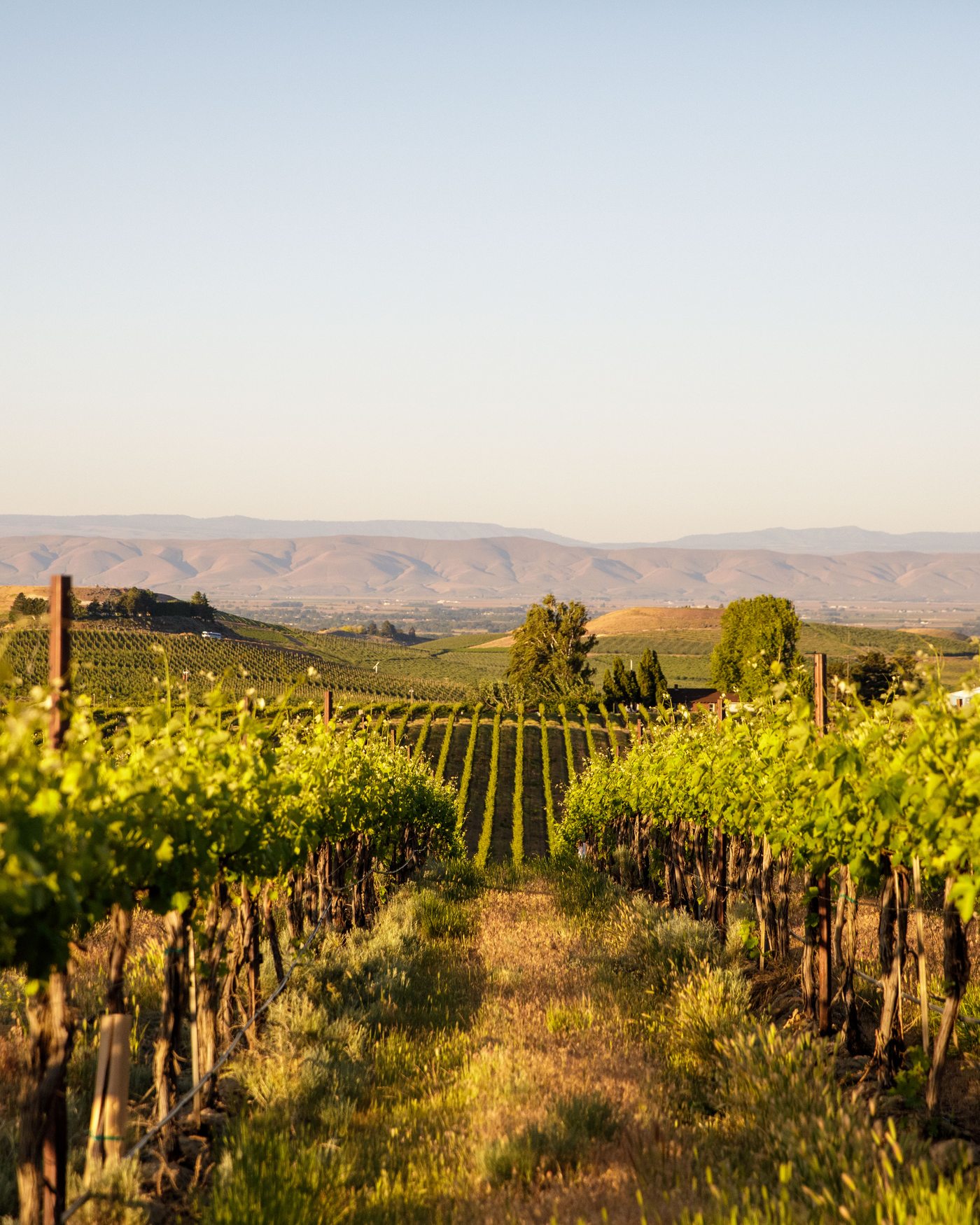
At the end of the last ice age, the Missoula floods poured across eastern Washington and left their sediment in the valleys. Most of the state’s vineyards grow in it. Elephant Mountain sits above the high-water line.
Most Washington Cabernet grows in flood sediment. Ours doesn’t. The vines work harder for less, and the wine carries it in its structure.
The soil
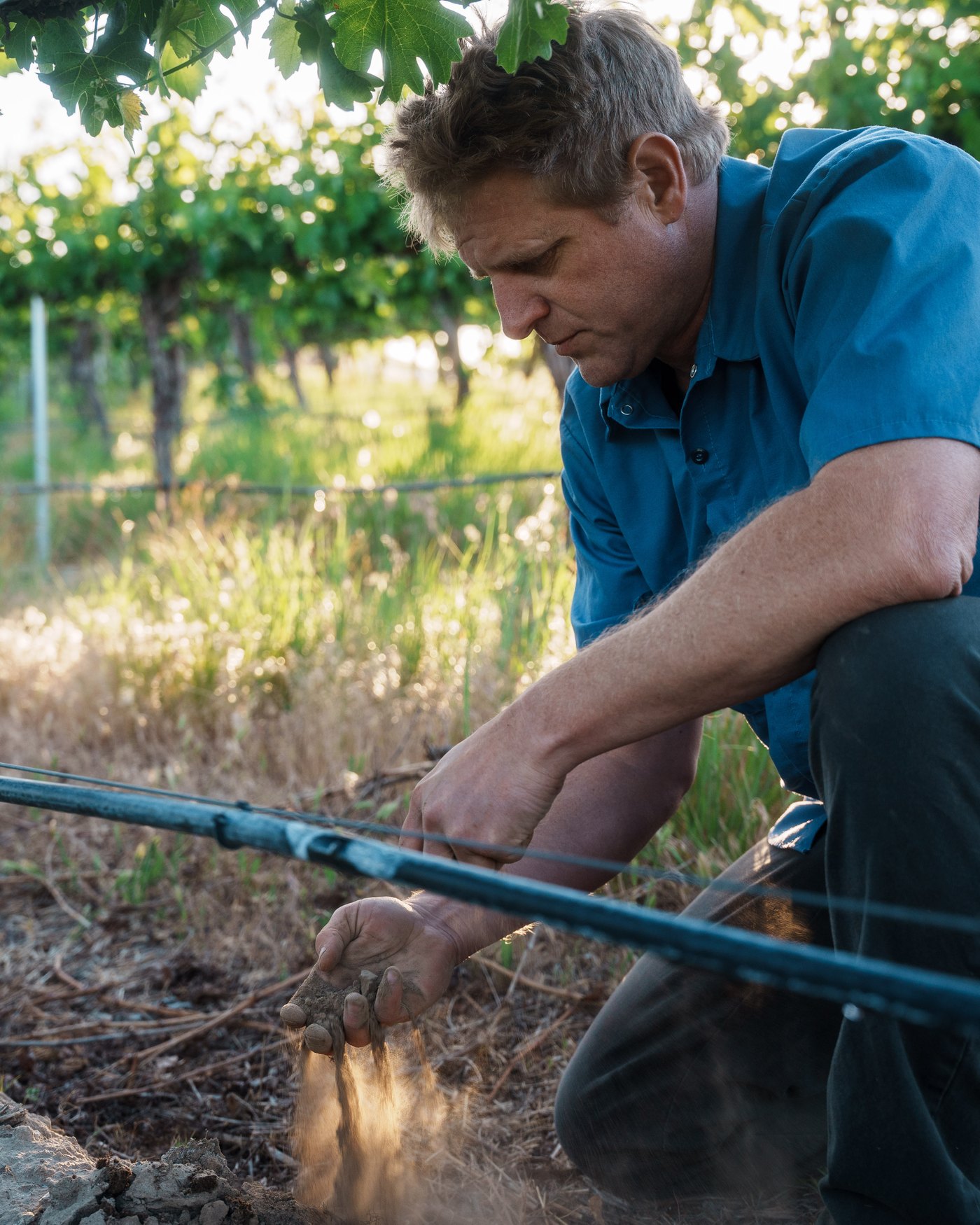
Harwood-Burke-Wiehl. It’s the Goldilocks of soils: it holds enough water, lets enough go, and feeds the vine at the right pace. With less than six inches of rain a year, that balance lets us decide exactly when the vines drink. That’s where the concentration comes from.
Own roots
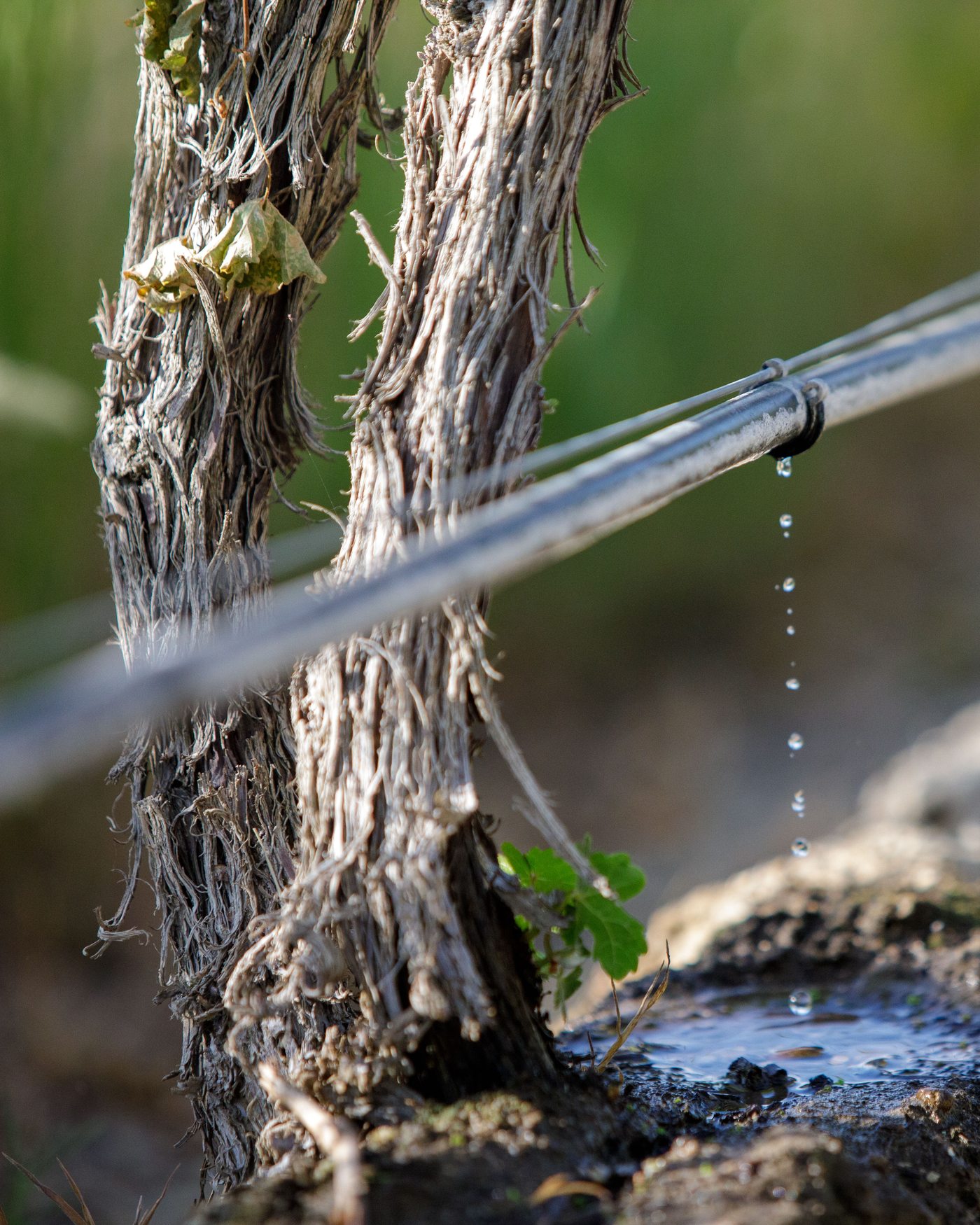
The vines were planted in 1998 on their own roots, not grafted. Almost every vineyard in the world is grafted onto rootstock to survive phylloxera, the great Cabernets of Bordeaux and Napa included. Ours grow on their own roots, at 1,500 feet. High-elevation, own-rooted Cabernet Sauvignon is about as rare as it gets: the place, the vine and the fruit, with nothing in between.
The mountain doesn’t care what we want. It tells us what it will give, and we listen.Andrew Schultz
Elephant Mountain
El Fuego
New posts from the journal will show here.
Follow the farming · @andrewleeschultz